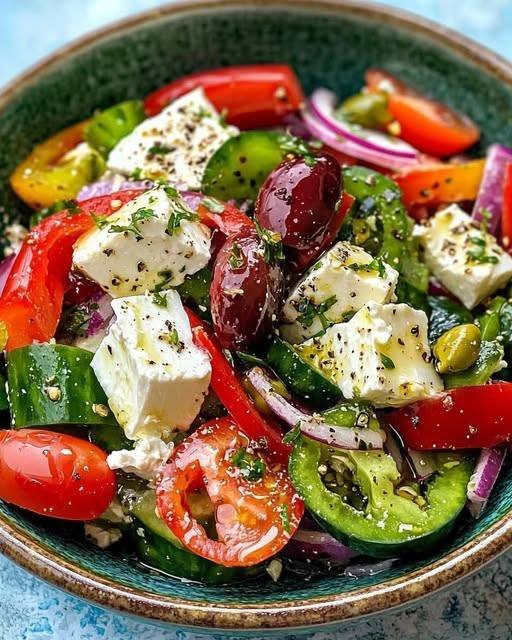
🇬🇷 Greek Salad (Horiatiki) – Authentic Recipe
🥗 Ingredients:
-
4 medium tomatoes, cut into wedges or large chunks
-
1 cucumber, peeled in stripes and sliced into half-moons
-
1 green bell pepper, sliced into thin rings
-
1 small red onion, thinly sliced
-
200g (7 oz) block of Greek feta cheese, in a thick slab
-
A handful of Kalamata olives, whole (with pits)
-
1 tsp dried oregano
-
Sea salt, to taste
-
Freshly ground black pepper, to taste
-
Extra virgin olive oil, generous drizzle (3–4 tbsp)
-
(Optional) A small splash of red wine vinegar or a squeeze of lemon juice
🥣 Instructions:
-
Prep the vegetables
Wash and cut the tomatoes, cucumber, pepper, and onion. Place in a shallow salad bowl or dish. -
Add olives
Scatter the Kalamata olives over the veggies. -
Top with feta
Place the block of feta cheese right on top (don’t crumble it — traditional Horiatiki uses a whole slice). -
Season and drizzle
Sprinkle with oregano, salt, pepper. Drizzle generously with extra virgin olive oil. Add vinegar or lemon juice if using. -
Serve immediately
Best served at room temperature with crusty bread to mop up the juices!
❓ Greek Salad Q&A:
Q1: What makes this salad “Horiatiki”?
A: Horiatiki means “village-style” in Greek. It’s the traditional salad served in rural Greece — simple, rustic, and without lettuce.
Q2: Can I use crumbled feta instead of a block?
A: You can, but for authenticity, use a block of Greek feta made from sheep’s milk, not cow’s milk. A slab preserves texture and appearance.
Q3: Is it served cold or at room temperature?
A: Room temperature is traditional. This brings out the flavors of the tomatoes and olive oil.
Q4: What kind of olives should I use?
A: Use Kalamata olives, preferably whole and with pits for the best flavor. You can pit them yourself if you prefer.
Q5: Why no lettuce?
A: Greek village salad is never made with lettuce. Lettuce is found in Westernized versions, but not in authentic Greek Horiatiki.
Q6: Can I make it ahead?
A: It’s best fresh, but you can chop the vegetables a few hours in advance. Add salt, feta, and olive oil just before serving to avoid sogginess.
Q7: Is this salad vegetarian or vegan?
A: It’s vegetarian, but not vegan due to the feta. To make it vegan, use a plant-based feta alternative.
Q8: What goes well with Greek salad?
A: Serve it with:
-
Grilled meats or fish
-
Pita or crusty bread
-
Tzatziki
-
Moussaka or pastitsio
Q9: What’s the best olive oil to use?
A: Use a high-quality Greek extra virgin olive oil — it’s the heart of the dish.
Q10: Can I use cherry tomatoes?
A: You can in a pinch, but traditional Greek salad uses large, ripe tomatoes cut into chunks for juicy texture.