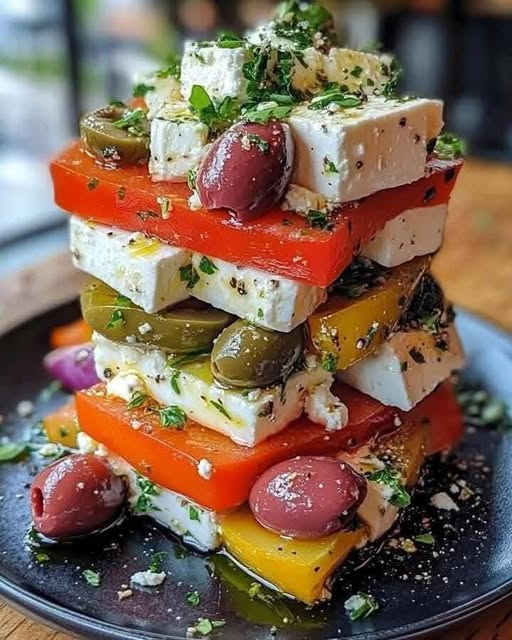
Greek salad, or Horiatiki, is one of the most iconic dishes of Mediterranean cuisine. Traditionally simple and rustic, it celebrates the natural flavors of sun-ripened vegetables, briny olives, creamy feta cheese, and fragrant olive oil. This Greek Salad Stack with Feta and Olives reimagines the classic dish in a visually striking, layered format while preserving its authentic taste and spirit.
Instead of tossing the ingredients together, this recipe focuses on structured layering, allowing each component to shine individually. The result is a dish that feels elegant enough for a dinner party, yet remains fresh, healthy, and deeply satisfying. Whether served as a starter, light lunch, or side dish, this stacked salad is guaranteed to impress.
Why a Greek Salad Stack?
Stacking the salad transforms a familiar recipe into something memorable. Each bite delivers contrast—crunchy vegetables, creamy feta, juicy tomatoes, and salty olives—while the layers showcase vibrant Mediterranean colors. The stack also allows better control over texture and seasoning, ensuring every component is properly dressed and balanced.
This recipe is ideal for:
-
Entertaining guests
-
Summer lunches
-
Mediterranean-themed dinners
-
Healthy, low-carb meals
-
Vegetarian diets
Ingredients
For the Salad Layers
-
1 cup romaine lettuce, finely chopped
Adds a crisp, fresh base and a gentle bitterness that balances the richness of feta. -
½ cup cucumber, diced or sliced into planks
Use English or Persian cucumbers for fewer seeds and better texture. -
½ cup cherry tomatoes, halved or sliced into thick rounds
Choose ripe, sweet tomatoes for maximum flavor. -
¼ cup red onion, thinly sliced
Provides sharpness and color; soaking briefly in cold water mellows the bite. -
½ cup Greek feta cheese (block, not pre-crumbled)
Authentic feta made from sheep’s milk offers superior creaminess and tang. -
¼ cup Kalamata olives, pitted
Their rich, briny flavor defines the dish. -
Optional additions (as seen in the image):
-
Roasted red peppers or yellow bell peppers, sliced
-
Fresh parsley or oregano, finely chopped
-
For the Dressing
-
¼ cup extra-virgin olive oil
Use high-quality olive oil; it is the backbone of the dish. -
1 tablespoon red wine vinegar
Adds brightness and acidity. -
1 teaspoon dried oregano
Essential for authentic Greek flavor. -
½ teaspoon freshly ground black pepper
-
¼ teaspoon sea salt (adjust carefully, as feta and olives are salty)
-
Optional:
-
½ teaspoon Dijon mustard for emulsification
-
A pinch of lemon zest for freshness
-
Equipment Needed
-
Sharp chef’s knife
-
Cutting board
-
Small bowl for dressing
-
Spoon or whisk
-
Ring mold or square mold (optional, for clean stacking)
-
Serving plate
Step-by-Step Instructions
Step 1: Prepare the Vegetables
Start by washing and drying all vegetables thoroughly. Excess moisture can dilute the flavors and cause the stack to collapse.
-
Chop the romaine lettuce into small, uniform pieces.
-
Slice the cucumber into thick rounds or rectangular planks for stability.
-
Cut cherry tomatoes into halves or thick slices.
-
Slice the red onion as thinly as possible.
Pro Tip: If the onion flavor is too strong, soak the slices in ice-cold water for 10 minutes, then drain and pat dry.
Step 2: Prepare the Feta
Using a sharp knife, cut the block of feta into even rectangular slices rather than crumbling it. This is key for stacking. The feta should be thick enough to hold its shape but not so thick that it overwhelms the vegetables.
Reserve a small portion to crumble on top for garnish.
Step 3: Make the Dressing
In a small bowl, whisk together:
-
Extra-virgin olive oil
-
Red wine vinegar
-
Dried oregano
-
Black pepper
-
Salt (sparingly)
Taste and adjust. The dressing should be bright, herbaceous, and well-balanced.
Step 4: Lightly Dress Individual Components
Instead of dressing everything together, lightly season each element:
-
Toss cucumbers and tomatoes with a small spoonful of dressing.
-
Lightly coat romaine lettuce.
-
Drizzle a few drops of olive oil over the feta slices.
-
Leave olives undressed; they provide their own seasoning.
This technique prevents sogginess and preserves texture.
Step 5: Assemble the Stack
If using a ring mold, place it in the center of the plate. Otherwise, assemble free-form.
Suggested Layer Order (Bottom to Top):
-
Romaine lettuce – lightly pressed
-
Cucumber slices
-
Feta slice
-
Tomato layer
-
Red onion and olives
-
Second feta slice
-
Roasted peppers (optional)
-
Final feta layer
Repeat layers if desired for height.
Carefully remove the mold, if using.
Step 6: Garnish and Finish
-
Sprinkle crumbled feta on top.
-
Add whole Kalamata olives around the base.
-
Drizzle with remaining dressing.
-
Finish with chopped parsley or oregano.
-
Crack fresh black pepper over the top.
Serving Suggestions
-
Serve chilled or at room temperature.
-
Pair with warm pita bread or grilled flatbread.
-
Add grilled chicken, lamb, or shrimp for a protein-rich meal.
-
Serve alongside hummus, tzatziki, or baba ghanoush.
Variations
Vegan Version
-
Replace feta with marinated tofu or almond-based vegan feta.
-
Increase olives and herbs for extra flavor.
Low-Sodium Version
-
Use fewer olives.
-
Rinse feta briefly in cold water before slicing.
Rustic Style
-
Skip stacking and serve layered on a platter.
-
Tear vegetables by hand for a casual look.
Storage and Make-Ahead Tips
-
Components can be prepped up to 24 hours in advance.
-
Store vegetables and feta separately in airtight containers.
-
Assemble just before serving for best texture.
Nutritional Benefits
This dish is:
-
Rich in healthy fats from olive oil
-
High in calcium and protein from feta
-
Packed with antioxidants and fiber
-
Naturally gluten-free and low-carb
Final Thoughts
The Greek Salad Stack with Feta and Olives is more than a salad—it’s a celebration of Mediterranean simplicity elevated through thoughtful presentation. By respecting traditional ingredients while embracing modern plating, this recipe bridges rustic charm and refined elegance.