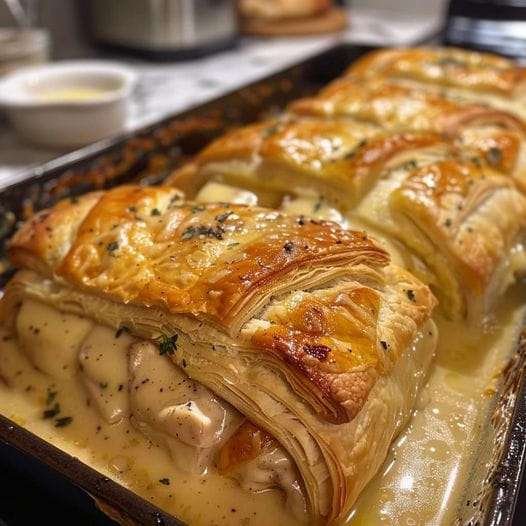
Chicken Wellington is the cozier, more weeknight-friendly cousin of Beef Wellington. Instead of beef tenderloin, we use tender chicken breasts, wrap them in savory fillings, and seal everything inside buttery puff pastry. The result is crisp, flaky layers on the outside and juicy, creamy chicken on the inside — exactly like what you’re seeing in the photo.
This version leans into garlic, mushrooms, herbs, and a rich cream sauce, making it indulgent without being overly complicated.
Ingredients
For the Chicken and Filling
-
4 boneless, skinless chicken breasts
-
Salt and freshly ground black pepper, to taste
-
2 tablespoons olive oil
-
4 tablespoons unsalted butter
-
1 small sweet onion, finely chopped
-
5 garlic cloves, finely chopped
-
8 oz (225 g) mushrooms, finely diced (button or cremini work best)
-
1 teaspoon fresh thyme leaves (or ½ teaspoon dried)
-
1 teaspoon fresh parsley, finely chopped
-
½ teaspoon paprika
-
½ teaspoon Dijon mustard
-
½ cup heavy cream
-
¼ cup chicken broth
-
¼ cup grated Parmesan cheese
For Assembly
-
1–2 sheets puff pastry, thawed but cold
-
1 egg, beaten (for egg wash)
-
Optional: thin slices of prosciutto or ham (adds flavor and moisture protection)
Optional Add-Ins
-
Spinach (sautéed and squeezed dry)
-
Gruyère, mozzarella, or Swiss cheese
-
A pinch of nutmeg for warmth
Equipment You’ll Need
-
Large skillet
-
Baking sheet
-
Parchment paper
-
Sharp knife
-
Pastry brush
Step-by-Step Instructions
1. Prepare the Chicken
Start by patting the chicken breasts dry with paper towels. This is more important than it sounds — moisture prevents proper browning.
Season both sides generously with salt and black pepper. If the chicken breasts are very thick, you can butterfly them slightly or gently pound them to an even thickness. Uniform chicken cooks more evenly and rolls better inside the pastry.
Heat the olive oil in a large skillet over medium-high heat. Once hot, add the chicken breasts and sear for 2–3 minutes per side, just until lightly golden. You are not cooking them through — this step is purely for flavor.
Remove the chicken from the pan and set aside to cool completely. Cooling is essential; hot chicken will melt the pastry later.
2. Make the Creamy Mushroom Filling
In the same skillet (don’t wipe it out — flavor lives there), melt the butter over medium heat.
Add the chopped onion and cook for 4–5 minutes, stirring frequently, until soft and translucent but not browned. Add the garlic and cook for another 30 seconds until fragrant.
Now add the mushrooms. Spread them out and let them cook undisturbed for a minute before stirring. Mushrooms release a lot of moisture, and you want that moisture to evaporate rather than steam. Cook for 6–8 minutes, until the mixture is deeply savory and almost paste-like.
Season with thyme, parsley, paprika, salt, and pepper.
Stir in the Dijon mustard, then pour in the chicken broth. Let it simmer until reduced by about half. Add the cream and simmer gently for 2–3 minutes, just until thickened. Finish with Parmesan cheese and stir until melted.
Remove from heat and allow the mixture to cool completely. Again — cooling matters.
3. Prep the Puff Pastry
Preheat your oven to 400°F (200°C). Line a baking sheet with parchment paper.
Lightly flour your work surface and roll out the puff pastry just enough to smooth seams or increase size slightly. You want the pastry cold but flexible.
Cut the pastry into rectangles large enough to fully wrap each chicken breast.
4. Assemble the Wellingtons
This is the fun (and slightly dramatic) part.
If using prosciutto, lay 1–2 slices on the pastry first. This creates a moisture barrier and adds saltiness.
Spoon a generous layer of the mushroom filling onto the center of the pastry. Place the chicken breast on top. Spoon a little more filling over the chicken.
Carefully fold the pastry up and over the chicken, sealing the edges underneath. Press gently to remove air pockets. Place seam-side down on the prepared baking sheet.
Repeat with remaining chicken.
Brush each Wellington generously with egg wash. Use a sharp knife to cut small slits on top — this allows steam to escape and keeps the pastry crisp.
5. Bake
Bake in the preheated oven for 25–30 minutes, until the pastry is deep golden brown and puffed.
If you’re nervous about doneness, the internal temperature of the chicken should reach 165°F (74°C). Let the Wellingtons rest for 5–10 minutes before slicing. This helps the filling set and prevents leaks.
Serving Suggestions
Chicken Wellington is rich, so simple sides work best:
-
Roasted asparagus or green beans
-
Garlic mashed potatoes
-
A crisp green salad with lemon vinaigrette
-
Steamed carrots or broccolini
For extra indulgence, serve with:
-
A light cream or Dijon sauce
-
Pan gravy made from chicken drippings
Tips for Success
Keep everything cool.
Warm fillings or chicken will sabotage your pastry. If anything feels warm, refrigerate briefly before assembling.
Don’t overload.
Too much filling leads to leaks. You want flavor, not an explosion.
Seal well.
Press seams firmly and always place seam-side down.
Egg wash generously.
This is what gives that glossy, bakery-level finish.
Variations
Spinach & Cheese Chicken Wellington
Add sautéed spinach and shredded Gruyère to the filling.
Mediterranean Style
Use sun-dried tomatoes, feta, and oregano instead of mushrooms.
Mustard Cream Version
Increase Dijon and add a splash of white wine for brightness.
Mini Wellingtons
Cut chicken into smaller portions for individual servings or appetizers.
Storage & Reheating
-
Refrigerate: Up to 3 days in an airtight container
-
Reheat: Oven at 350°F (175°C) for 15–20 minutes
-
Avoid microwaving — it ruins the pastry
Final Thoughts
Chicken Wellington looks fancy, tastes luxurious, and still manages to be approachable. The flaky pastry, creamy filling, and juicy chicken make it one of those dishes that gets real compliments — the “you made this?” kind.