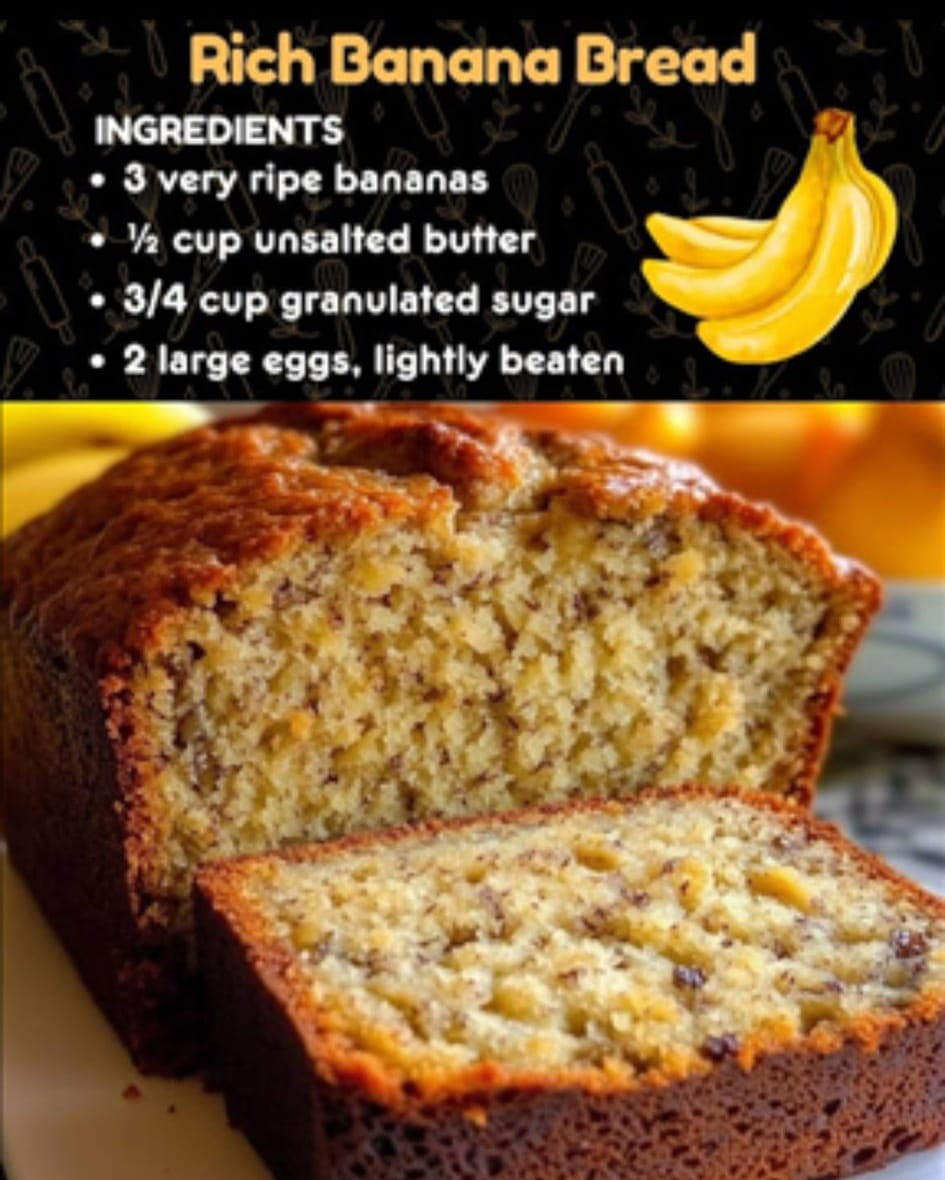
Banana bread is more than just a way to use up overripe bananas. When made properly, it’s a deeply comforting baked good with a soft crumb, caramelized edges, and a rich aroma that fills the kitchen and lingers long after the loaf is gone.
This version is rich but not greasy, sweet but balanced, and soft for days. It’s based on simple pantry ingredients, yet the technique is what makes it special. If you’ve ever had banana bread that was dry, dense, or bland, this recipe fixes all of that.
Why This Banana Bread Works
Great banana bread depends on a few key principles:
-
Very ripe bananas for sweetness and moisture
-
Melted butter for richness without heaviness
-
Minimal mixing to keep the crumb tender
-
Correct baking temperature to cook evenly without drying
This recipe respects all four, producing a loaf that slices cleanly but stays incredibly soft.
Ingredients (Perfectly Balanced for One Loaf)
Wet Ingredients
-
½ cup unsalted butter, melted and slightly cooled
-
1 cup white granulated sugar
-
2 large eggs, room temperature
-
1 teaspoon vanilla extract
-
3 very ripe bananas, mashed (about 1½ cups)
Dry Ingredients
-
1½ cups all-purpose flour
-
1 teaspoon baking soda
-
½ teaspoon salt
Optional Add-Ins (Choose One or Two)
-
½ cup chopped walnuts or pecans
-
½ cup chocolate chips
-
¼ teaspoon cinnamon or nutmeg
-
2 tablespoons sour cream or Greek yogurt (extra moisture)
The Importance of Banana Ripeness
The bananas should be deeply speckled or nearly black. At this stage:
-
Their starches have converted to sugar
-
They mash smoothly
-
They add moisture without extra liquid
If your bananas aren’t ripe enough, your bread will taste flat and dry.
Quick ripening trick:
Bake unpeeled bananas at 300°F (150°C) for 15–20 minutes until skins blacken. Cool, then use.
Step-by-Step Instructions (With Technique Explained)
Step 1: Preheat and Prepare
Preheat your oven to 350°F (175°C).
Grease a 9×5-inch loaf pan with butter or nonstick spray. For easy removal, line with parchment paper, leaving an overhang.
Why this matters:
Banana bread sticks easily because of its sugar content. Proper prep prevents heartbreak.
Step 2: Melt the Butter
Melt the butter gently and allow it to cool slightly.
You want it liquid but not hot. Hot butter can scramble the eggs and create a greasy texture.
Melted butter gives:
-
Rich flavor
-
Moist crumb
-
Softer texture than creamed butter
Step 3: Combine Butter and Sugar
In a large bowl, whisk together:
-
Melted butter
-
White sugar
Whisk until glossy and smooth.
This step dissolves sugar slightly, helping the loaf bake evenly and preventing graininess.
Step 4: Add Eggs and Vanilla
Add eggs one at a time, whisking well after each addition.
Stir in vanilla extract.
Room-temperature eggs emulsify better, creating a smoother batter and more uniform crumb.
Step 5: Mash and Add Bananas
Mash bananas thoroughly with a fork.
You want mostly smooth with a few small lumps.
Add mashed bananas to the wet mixture and stir gently until combined.
This is where the bread gets its:
-
Flavor
-
Moisture
-
Natural sweetness
Step 6: Mix Dry Ingredients Separately
In a separate bowl, whisk together:
-
Flour
-
Baking soda
-
Salt
Whisking distributes the leavening evenly and prevents bitter pockets of baking soda.
Step 7: Combine Wet and Dry (Gently!)
Add the dry ingredients to the wet mixture.
Using a spatula or wooden spoon, fold gently until just combined.
Stop when you no longer see dry flour.
Overmixing develops gluten, which leads to:
-
Dense texture
-
Tough crumb
-
Gummy interior
Banana bread should be tender, not chewy.
Step 8: Fold in Add-Ins (Optional)
If using nuts, chocolate chips, or spices, fold them in now.
Dust add-ins lightly with flour before adding—this helps prevent sinking.
Step 9: Transfer to Pan
Pour batter into prepared loaf pan.
Smooth the top gently.
Optional bakery touch:
Slice a banana lengthwise and place on top for a beautiful finish.
Step 10: Bake
Bake at 350°F (175°C) for 55–65 minutes.
Check at 50 minutes.
The bread is done when:
-
A toothpick inserted comes out clean or with moist crumbs
-
The top is golden brown
-
The loaf pulls slightly from the pan edges
If browning too fast, tent loosely with foil.
Cooling (Do Not Skip This)
Let the loaf cool in the pan for 15 minutes, then transfer to a wire rack.
Cooling allows the crumb to set properly. Cutting too soon can make the loaf seem underbaked even when it isn’t.
Texture & Flavor Breakdown
When done correctly, this banana bread will have:
-
A moist, tender interior
-
Fine, even crumb
-
Rich banana aroma
-
Slightly caramelized crust
-
Balanced sweetness
It should stay soft for 3–4 days at room temperature.
Common Banana Bread Mistakes
Dry Bread
-
Too much flour
-
Overbaking
-
Not enough banana
Dense or Gummy Center
-
Overmixing
-
Oven temperature too low
-
Cutting too early
Flat Flavor
-
Under-ripe bananas
-
No salt
-
Cheap vanilla (it matters!)
Variations You’ll Love
Classic Walnut Banana Bread
Add ½ cup toasted walnuts for crunch.
Chocolate Chip Banana Bread
Use semi-sweet chips for balance.
Cinnamon Swirl Banana Bread
Layer cinnamon sugar in the batter for a ribbon effect.
Extra-Moist Banana Bread
Add 2 tablespoons sour cream or yogurt.
Storage & Freezing
Room Temperature:
Wrap tightly and store up to 4 days.
Refrigerator:
Up to 7 days, but bring to room temp before serving.
Freezer:
Wrap slices individually and freeze up to 3 months.
Final Thoughts
This rich banana bread is the kind of recipe you keep forever. It’s forgiving, deeply flavorful, and endlessly adaptable. Whether eaten warm with butter, toasted the next day, or turned into French toast, it never disappoints.